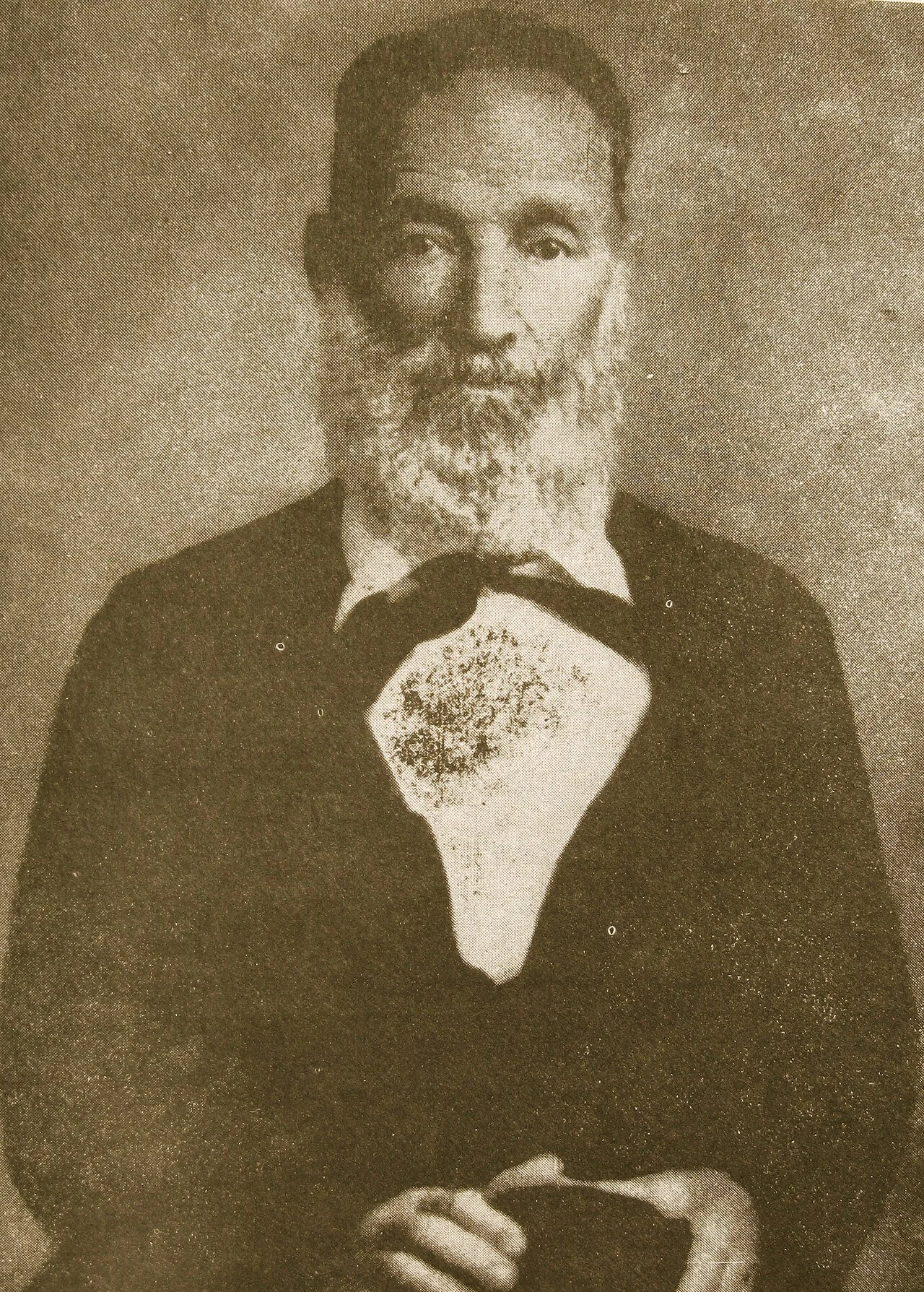
Robert Sayers Sheffey (1820-1902)
You can hear an audio recording of this post on Episode 54 of the Methodical Methodist Podcast!
He has been known as the “Saint Francis of the Wilderness” and as “Brother Bob.” Robert Sayers Sheffey didn’t fit the mold of a polished preacher. He came from the backroads of Appalachia, rode the rugged circuits of Southwest Virginia, and preached as a Methodist itinerant preacher whose ministry was unconventional and unforgettable. Today, he remains one of the most legendary figures in the history of Holston Methodism.
He was known for his peculiar and odd behavior, and he became a part of the folklore of Appalachian Methodism. Sheffey was also known as a man of deep compassion, conviction, and a relentless commitment to prayer. As the stories suggest, his prayers carried an unusual weight. Whether confronting injustice, calling sinners to repentance, or simply kneeling in quiet conversation with God, Sheffey lived with a kind of holy urgency that’s hard to ignore.
Over time, stories about Sheffey grew into a blend of history, testimony, and Appalachian folklore, making it difficult at times to separate documented fact from legend. For many within Holston Methodism, the name Robert Sayers Sheffey still carries an almost mythical quality. His ministry helped shape the spiritual imagination of Appalachian Methodism in this region for generations.
Reverend Robert Sayers Sheffey was one of the most interesting characters in Appalachian Methodist history. He was born in the small community of Ivanhoe, Wythe County, Virginia, on July 4, 1820. He came from a prominent family in Virginia. His father was Henry Lawrence Sheffey, and his mother was Margaret White Sheffey. He was the youngest of five brothers: Daniel, James, Hugh, and Lawrence. Two or three of his brothers went on to become lawyers and were prominent figures in their profession. Tragically, Robert’s mother died when he was two years old (the oldest brother was ten years old). Daniel and Hugh went to live with their uncle Daniel in Staunton, and the other three boys went to live with their mother’s relatives and were raised by their aunt in Abingdon, Virginia.
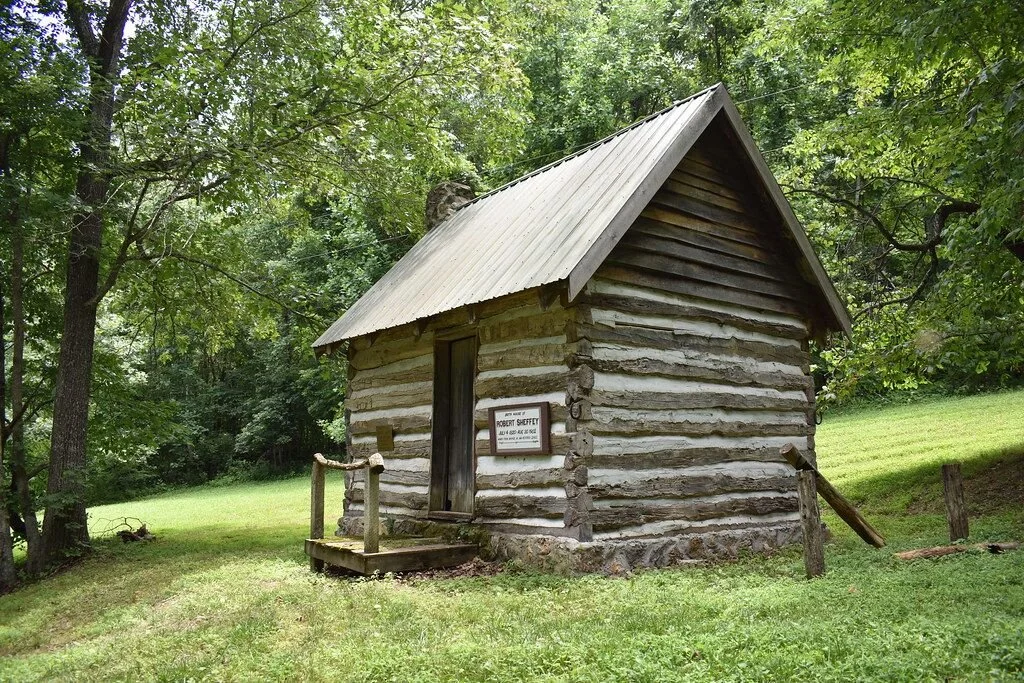
Robert Sheffey Birth House
Robert Sheffey had a strange aversion to education. He was from an educated family, but as one historian notes, “he mastered the ordinary branches of an English education, but his early dislike for books and aversion for profound study followed him all through his long and eventful life.”[i] Sheffey, however, did attend Emory and Henry College in 1839 and 1840.
When he was around eighteen years old, Robert was converted at a revival in Abingdon. Sheffey said he was “born of the flesh on July 4, 1820, in Ivanhoe, Wythe County, Virginia, and that he was born of the Spirit on January 9, 1839, over Greenway's store, at Abingdon, Virginia.”[ii] His relatives wanted him to continue on in the Presbyterian church, but he became a Methodist. He believed that being a Methodist aligned more with his values and modes of worship. He did not waste much time in becoming an itinerant Methodist preacher. He immediately began traveling around and preaching in local areas throughout the region.
Even amid his constant travels and unusual ministry, Sheffey eventually found companionship and stability in marriage. In 1843, Sheffey married Elizabeth Frances Swecker. She was the daughter of Wendell Swecker and Rebecca Peters Swecker. Together, Robert and Elizabeth had six children: Daniel Winton, John Robert, James, Hugh Trigg, Margaret Ellen, and Sarah Louise. During this time, Sheffey farmed, taught school, served as a clerk, and kept a store. And then, after the death of his wife Elizabeth in 1854, Sheffey became fully committed to his ministry as a Methodist preacher.
As Sheffey traveled the mountains and backroads of Appalachia, stories about his unusual behavior began to spread. Some viewed him as eccentric, others as deeply holy, but nearly everyone who encountered him remembered him. A nephew called him "one of the most singularly eccentric men I have ever known.... He does not belong to the conference but goes about preaching on his own hook and is never satisfied until he gets up a tremendous shout."[iii]
The Methodist preacher George C. Rankin once said that Sheffey, “couldn’t preach a lick, acted more like a crazy man than otherwise, but he was wonderful in a meeting. He would stir the people, crowd the mourner’s bench with crying penitents, and have genuine conversions by the score.”[iv]
He has been described as a neat freak or germaphobe. No matter where he was or who he was with, he was always thoroughly clean. Many noted his strictness on matters of cleanliness. In some of the homes that he visited, he was remembered for his peculiarities about cleanliness. On one occasion he wrote, “I think a person should be nice and clean and decent” and “If you keep the heart right and the skin clean, you won’t have any need for lawyers, doctors, and penitentiaries.”[v]
Whenever he was a guest at someone’s table, he had a habit: he would pour a spoonful of coffee into his saucer, wipe the rim where the host had touched it, then get up, walk over to the door, and toss the coffee outside—or into the fireplace.
One time, Sheffey was visiting the home of Mr. and Mrs. Michael Gibson near Radford, Virginia. A woman with a small child came by the Gibson home. The child had been playing outside and his face was dirty. Sheffey noticed that the child was crying. He got up from his chair, got some soap, and he handed it to the mother and said, “Now, sister, just take the child and wash the sheep-tangles out of his nose and the dirt off his face, and cool him off, and he will quit crying.”[vi]
He avoided getting his hands dirty to the best of his ability. He believed that soap and water should be applied in no uncertain quantities if someone had dirt on their hands or on their bodies in any way whatsoever.
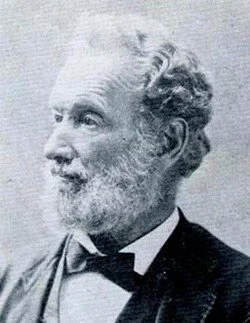
But Sheffey’s peculiarities were not limited to cleanliness. He also had an unusual tenderness toward animals and living creatures of every kind. This earned him the nickname, “St. Francis of the Wilderness.” He once dismounted his horse so that he could collect tadpoles in his handkerchief and transfer them to a stream from a small pool so they wouldn’t die. He tried to save other tadpoles by bringing water to their mud hole. Sheffey would often stop so that he could turn beetles, right side up. He would drop out of funeral processions so that he could move insects out of the way of wagon wheels.
He gave away his lunch to hungry dogs. He also tried to free flies caught on sticky paper, but he was unsuccessful. One time, when his brother-in-law cut a wasp in two with a pair of scissors, Sheffey went out to the yard and started praying. When the brother-in-law asked him why, Sheffey replied, “I am praying for the Lord to make another wasp to take the place of the one you killed.”[vii]
Sheffey had a sweet tooth and loved eating sugar, honey, and maple syrup. While he ate, he regularly prayed, “Lord, bless the little honeybees for they make sweet honey. Like sweet Jesus.”[viii]
Sheffey was especially considerate of his horse. He would carefully instruct hosts on how to water and feed his horse, and he often dismounted rather than make the horse walk up a steep hill.
He was also considerate of the welfare of human beings. He would often give away a new knitted pair of woolen socks to people who were in need. He would even take the socks off of his own feet and give them to people who needed them. One time, he was riding the trail on a cold day and gave his coat to a stranger he encountered who had none. He even gave away his horse to replace an animal that had died pulling a heavily loaded covered wagon.
After being beaten by a group of younger people after a meeting, Sheffey refused to testify against them in court. When they were convicted, he cried and pleaded to the judge to allow them to go unpunished because he had forgiven them.
While preaching in Giles County, he met Elizabeth Stafford. She went by Eliza, and she was the daughter of J.J.S. and Margaret Stafford. They were members of a pioneer family and lived in an area known as the “Irish Settlement” which was near Staffordsville. Sheffey and Eliza married, although her parents were not in favor of the marriage due to the fact that Sheffey was an itinerant preacher and didn’t remain very long in one place. But the marriage itself worked out well.
The only son from this marriage, Edward Sheffey, once said, “The longer I live the more firmly I am convinced that father made no mistake in his marriage.”[ix] Eliza and Sheffey loved each other deeply. He did all he could to honor her and care for their union. She never murmured or complained about his absence. As a boy, Edward once told his father, “Uncle Johnny thinks that you ought to spend more time with your family,” to which Sheffey replied, “Son, Uncle Johnny doesn't know which way the rats run. The Lord will take care of you.” Eventually, Sheffey won over his wife’s family, and they were reconciled to the marriage.
Sheffey was well known as a man of prayer. One person said, “Brother Sheffey was the most powerful man in prayer that I ever heard, but he couldn’t preach a lick.”[x] He prayed for rain in times of drought. He once prayed for bees to come and make honey where there had been none.
He prayed against moonshine stills and critiqued the people who ran them. According to folklore, there are at least twenty-five accounts of how Sheffey’s prayers led to the immediate destruction of stills and distilleries. Sheffey once prayed for the destruction of three distilleries on a creek near where Sheffey had been preaching. The owner of the first still died suddenly. The second still was destroyed by a falling tree. The third still was destroyed by a fire after Sheffey had spent a night in prayer against it.
One day Sheffey was traveling with a fellow Methodist preacher named John M. Romans. As they were traveling through Southwest Virginia, one of them spotted smoke coming from a still in the mountains. Sheffey got off of his horse and prayed that God might send a mighty torrent of rain that would wash out and destroy the distillery. There was not a cloud in the sky when he prayed this prayer. But then, he got back on his horse and within an hour, a heavy rainfall came and swept the area from one end to the other, washing out the entire distillery.
According to one legend, Sheffey held several weeks of meetings in his hometown of Ivanhoe. When the citizens rejected his message, Sheffey shook the dust off his feet and condemned the place to hell. According to local legend, the town never recovered. Residents claimed that homes later disappeared into sinkholes and that misfortune followed the community for years afterward.
Sheffey even once prayed that an honorable little boy would marry the nice little neighbor girl. And years later, that prayer was answered.
One time, Sheffey was at the home of Robert Wells who was logging huge trees off the mountain. Wells accidentally caught his foot between the wagon wheel and a stump. The foot was badly injured, but Brother Sheffey said he would pray about it, and in a few days Wells was out walking around and back at work.
Sheffey’s circuit took him across much of Southwest Virginia and Southern West Virginia, where he preached throughout fourteen different counties.
In an article from the Southwest Times of 1939, this is written: “Rev. Robert Sheffey was a missionary to the people of the mountains, a Methodist after John Wesley’s own heart. He traveled thousands of miles through all kinds of weather, ate and slept in hundreds of homes. He prayed and read to them the Scriptures. The people loved him and believed in his sincerity. His life was an open book, and they recognized him as being an epistle of Christ.”[xi]
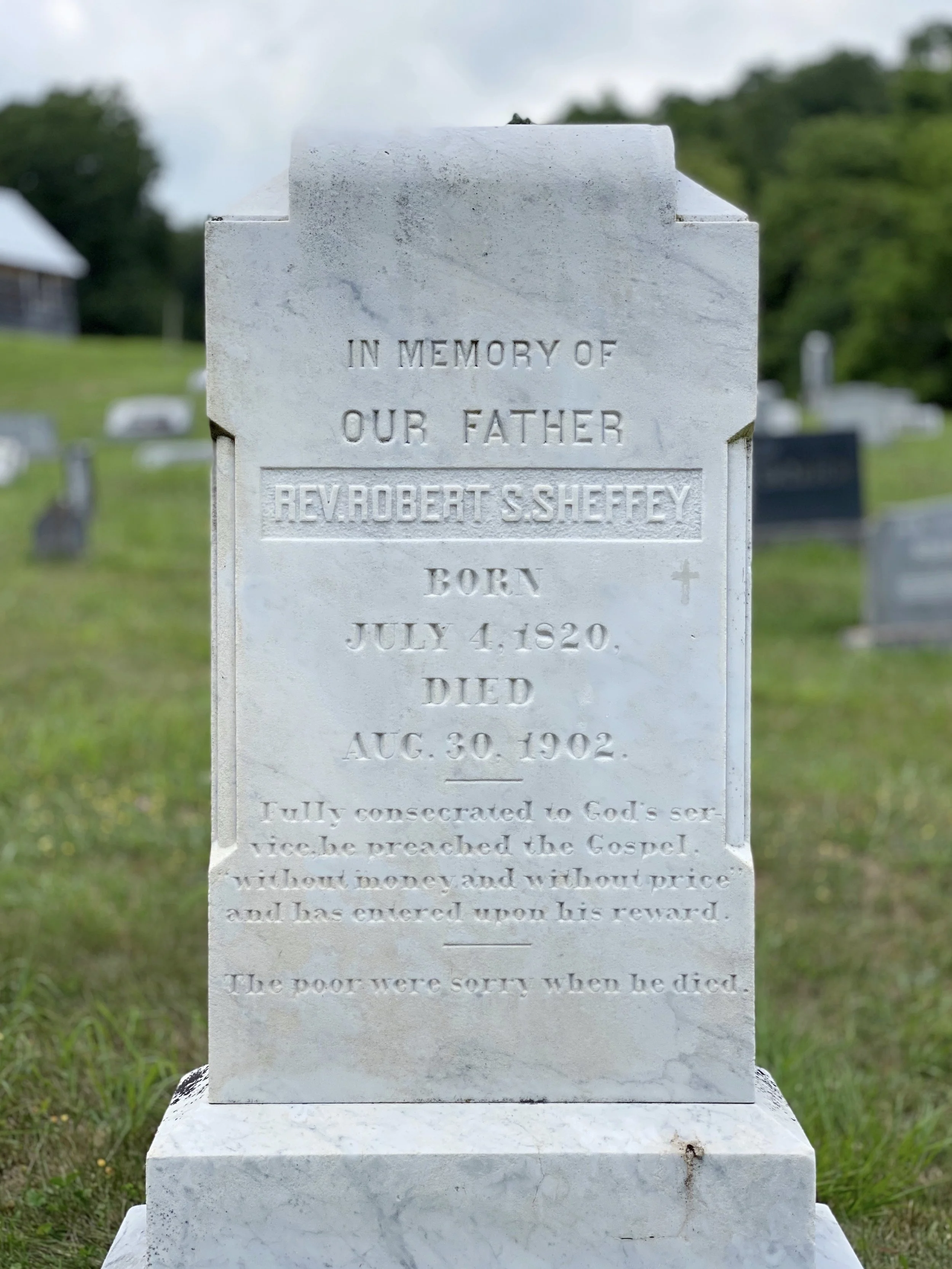
Eliza Sheffey died in September 1896. Sheffey continued preaching and traveling, but eventually he slowed down due to arthritis. In his last years, people would mail him letters, asking Sheffey to pray for them. And he would often pray their names aloud. Sheffey preferred staying away from cities and remaining in rural Giles County. He died at the home of a friend named Aurelius Vest on August 30, 1902. He is buried in Wesley Chapel Cemetery off Sheffey Memorial Road in Giles County.
By the end of his life, Robert Sheffey had become more than a preacher in the mountains. To many people, he had become a legend. Even today, Robert Sheffey remains a beloved and legendary figure in Holston Methodism. His stories continue to be told in churches, homes, and mountain communities across the region.
The funeral sermon was preached by Reverend W. C. Crockett who said, “Robert Sayers Sheffey was a man gentle and refined, both by nature and grace. He was pre-eminently a man of faith. He literally left all and followed Christ. He prayed to God in faith, and God heard and answered his prayers. He did his duty. He was faithful.”[xii]
One monument in his memory states, “Fully consecrated to God’s service, he preached the Gospel, without money and without price, and has entered upon his reward. The poor were very sorry when he died.”
Robert Sayers Sheffey was many things: an itinerant preacher, a mountain evangelist, a man of prayer, a source of Appalachian folklore, and one of the most memorable figures in Holston Methodist history. His life blended humor, mystery, compassion, and deep conviction in a way that still captures people’s attention today. Whether every story about him can be verified or not, the impact he left on the people and communities of Appalachia is undeniable. And in many ways, that legacy continues to live on wherever his stories are still told.
NOTES
[i] Willard Sanders Barbery, Story of the Life of Robert Sayers Sheffey: A Courier of the Long Trail, God’s Gentleman, a Man of Prayer and Unshaken Faith (Bluefield, VA, 1952), 27.
[ii] Willard Sanders Barbery, Story of the Life of Robert Sayers Sheffey, 57.
[iii] James I. Robertson, ed., Soldier of Southwestern Virginia: The Civil War Letters of Captain John Preston Sheffey (Baton Rouge: Louisiana State University Press, 2004), 191.
[iv] John Matzko, “Rescuing Bugs and Cursing Towns,” Christian History Institute blog, accessed May 6, 2026.
[v] Willard Sanders Barbery, Story of the Life of Robert Sayers Sheffey, 31.
[vi] Willard Sanders Barbery, Story of the Life of Robert Sayers Sheffey, 31.
[vii] Willard Sanders Barbery, Story of the Life of Robert Sayers Sheffey, 132.
[viii] Willard Sanders Barbery, Story of the Life of Robert Sayers Sheffey, 134.
[ix] Willard Sanders Barbery, Story of the Life of Robert Sayers Sheffey, 38.
[x] Willard Sanders Barbery, Story of the Life of Robert Sayers Sheffey, 48.
[xi] Pulaski Southwest Times, centennial edition, 1939.
[xii] Willard Sanders Barbery, Story of the Life of Robert Sayers Sheffey, 172.