The World Turned Upside Down
Hamilton & the Gospel | Part 1 of 6
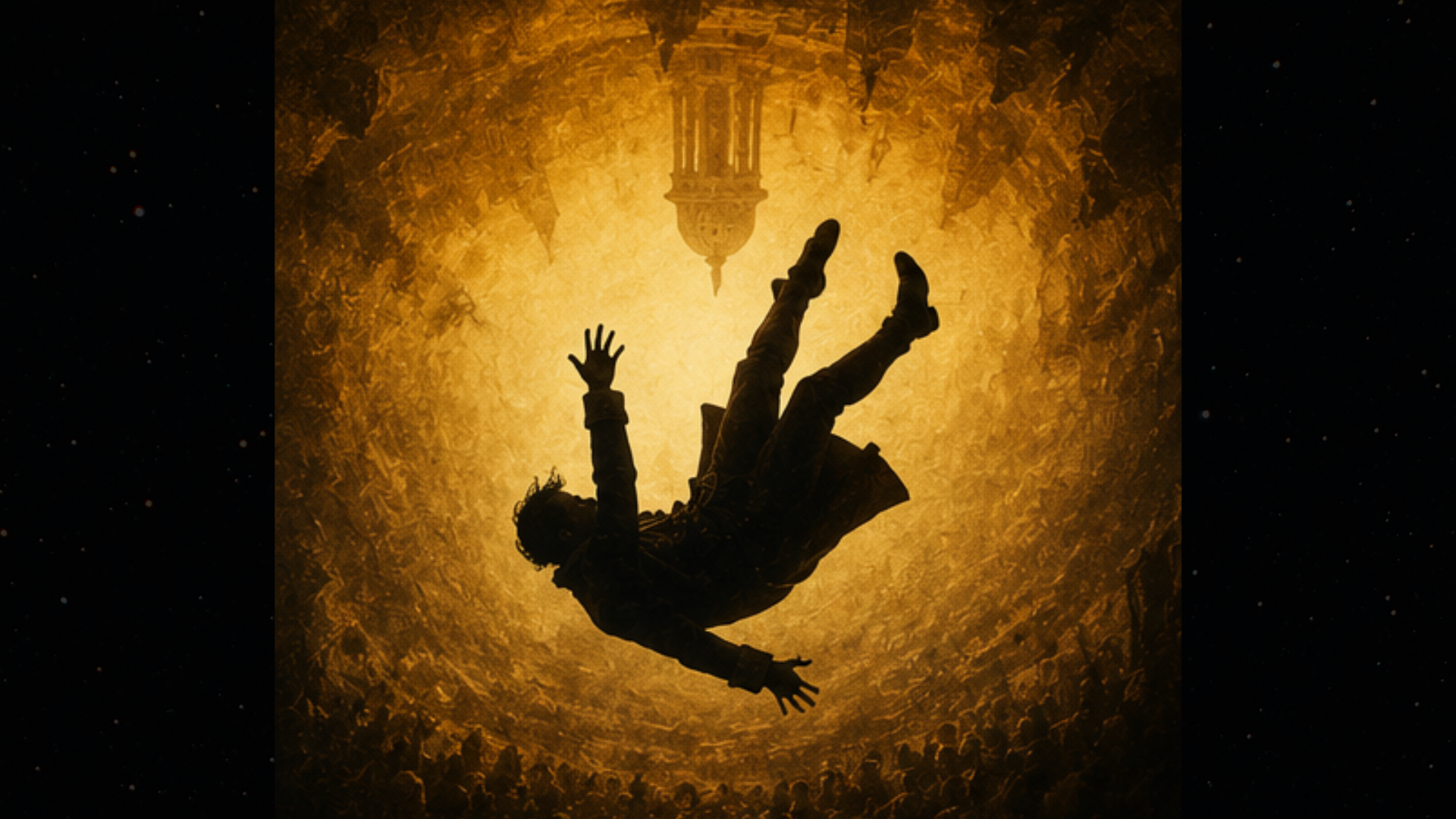
In January 2020, right before the coronavirus turned the world upside down, my wife Ally and I were able to go to see Hamilton at the Tennessee Performing Arts Center in Nashville. It was an amazing experience. Since then, we have enjoyed re-watching this show again when it was released on Disney Plus .
Every time we watch this show, we are completely blown away. We are amazed at how the creator, writer, and star of the show, Lin-Manuel Miranda, is able to use rap and hip-hop music in order to tell this historical tale. But what strikes me the most is how we can look at this story and see these themes of faith, forgiveness, grace, and redemption that are all throughout the story of Hamilton.
In his book God and Hamilton, Kevin Cloud talks about the connection of this musical and the Christian message by writing, “I believe that in the musical Hamilton, Miranda has turned preacher, or perhaps prophet. The story he tells about the life of Hamilton reverberates with the central truths of the Christian Scriptures. It becomes a thin place for us, reminding us of the presence of God among us. It points us toward love, grace, redemption, and inspires us to transform our lives as a response to this transcendent experience.”
In honor of our nation’s 250th anniversary, I want to share a few devotions about the connections found in Hamilton, the Gospel message, and our own lives as well.
Acts 17:1-9 (NRSV):
After Paul and Silas had passed through Amphipolis and Apollonia, they came to Thessalonica, where there was a synagogue of the Jews. And Paul went in, as was his custom, and on three sabbath days argued with them from the scriptures, explaining and proving that it was necessary for the Messiah to suffer and to rise from the dead, and saying, “This is the Messiah, Jesus whom I am proclaiming to you.” Some of them were persuaded and joined Paul and Silas, as did a great many of the devout Greeks and not a few of the leading women. But the Jews became jealous, and with the help of some ruffians in the marketplaces they formed a mob and set the city in an uproar.
While they were searching for Paul and Silas to bring them out to the assembly, they attacked Jason’s house. When they could not find them, they dragged Jason and some believers before the city authorities, shouting, “These people who have been turning the world upside down have come here also, and Jason has entertained them as guests. They are all acting contrary to the decrees of the emperor, saying that there is another king named Jesus.” The people and the city officials were disturbed when they heard this, and after they had taken bail from Jason and the others, they let them go.
Alexander Hamilton grew up as a poor, immigrant, orphan from a small Caribbean Island; And he was given the chance to travel to the colonies in America after writing a letter about his experience surviving a hurricane that had decimated his hometown – the Island of St. Croix. The letter was published in the local newspaper, and the people were so impressed with young Hamilton that they “took up a collection just to send him to the mainland.”
After receiving a scholarship to King’s College, Hamilton soon joins the efforts of the American Revolutionary War. He quickly links up with General George Washington and serves as his right-hand man. Hamilton is essentially Washington’s chief of staff for the Continental Army. And this poor, immigrant, orphan plays a crucial role in America’s victory over the British.
One of the songs in the musical Hamilton, chronicles some the events that took place during the Battle of Yorktown – the last battle of the American Revolution. After the battle, toward the end of the song, Hamilton says:
“We negotiate the terms of surrender. I see George Washington smile. We escort their men out of Yorktown. They stagger home single file. Tens of thousands of people flood the street. There are screams and the church bells ringing. And as our fallen foes retreat, I hear the drinking song they’re singing… The world turned upside down. The world turned upside down.”
According to Ron Chernow, the author of the book Alexander Hamilton, which was the main influence for this musical… the British soldiers really did sing a drinking song as they retreated. And it really was entitled, “The World Turned Upside Down.” It was an old protest song from the 1640’s that was actually based on this very passage of Scripture in Acts 17. The British soldiers sang this song as the unthinkable had suddenly become reality. It seemed as if the world really had turned upside down.
In Acts 17, Paul enters Thessalonica in order to preach the Gospel message of Jesus Christ. According to the Scottish theologian William Barclay, Thessalonica was a crucial place for the spread of Christianity – simply because of where it was situated. The main street in Thessalonica was a street called the Egnation Way. This Roman made street went from the Adriatic Sea to the Middle East. It went both east and west.
If Christianity could take root in Thessalonica, then that means that the Gospel message could be easily spread along this highway. It would become – like Johnny Cash might say – a Gospel Road. In other words, converting the town of Thessalonica would certainly help “the world turn upside down.”
When Paul arrives in Thessalonica, he does what he always does when he enters a new town. Paul goes and preaches in the synagogue. And for three Sabbaths in a row, Paul preaches from the Scriptures, he argues with the scholars, and he explains the meaning behind the resurrection of Jesus Christ. Paul essentially says, “It was necessary for the Messiah to suffer, die, and rise from the dead. And this Jesus that I am introducing you to is the Messiah” Acts 17:3 (paraphrase).
A lot of the God-fearing Greeks and female leaders in Thessalonica are receptive to Paul’s message. They join ranks with Paul and Silas. But some of the Jews are skeptical, and they actually become jealous of Paul’s ability to gain followers. They feel like their influence and authority over the people is starting to slip away. So, they form a mob in the marketplace, and they set the city into an uproar. They begin searching for Paul and Silas.
The mob reaches the home of a man named Jason – whom they believe is hiding Paul and Silas. The mob searches around, but they are unable to find them there. Paul and Silas are nowhere to be found in the home of Jason.
At this point, the angry mob decides that they want blood – and it doesn’t matter whose. So, they grab Jason and his friends, and they drag them before the city officials, yelling, “These people who have been turning the world upside down have come here also, and Jason has entertained them as guests. They are all acting contrary to the decrees of the emperor, saying that there is another king named Jesus” Acts 17:6b-7 (NRSV).
In the musical Hamilton, King George III is very humorously portrayed as a maniacal and obsessive ruler. During the song entitled “You’ll Be Back,” King George is essentially singing a breakup song to the colonies. He sings this to the revolutionaries in America:
“You say our love is draining and you can’t go on. You’ll be the one complaining when I am gone. And no, don’t change the subject. Cuz you’re my favorite subject. My sweet, submissive subject. My loyal, royal subject. Forever and ever and ever.”
Then he goes on to say… “I will kill your friends and family to remind you of my love.”
I can’t help but see the connection of the early Christians – who have come preaching about the resurrection of Jesus Christ. And the connection of the American Revolutionaries who fought for freedom against the tyranny of the British Government. In both of these cases, it seems as if the world has turned upside down. The natural order of things has shifted and changed.
The writer of Acts reminds us of who is really in charge… Not Caesar. Not King George III. Not Donald Trump. Not Nancy Pelosi. The Apostle Paul has come to bring a revolution to the people saying, “There is another King… His name is Jesus.”
We continue to see examples of racism and hate on the news. We continue to experience anxiety. We continue to deal with the grief, pain, and suffering that occur in our world. And sometimes it feels like the world is in deep need of some help. It feels like we need a Messiah like Jesus – a new King – now more than ever.
Perhaps – in the midst of all our grief, pain, and anxiety – we have a chance to join God in bringing about hope, redemption, and restoration. The mission statement of the United Methodist Church calls us: “To make disciples of Jesus Christ for the transformation of the world.” Maybe another way of putting it is to say that we are called “to turn the world upside down – for Jesus.”
This is what we are called to do as Christians. We are called to do these crazy things like forgive people. We are called to love our enemies. We are called to pray for those who persecute us. We are called to love our neighbors as ourselves. We are called to love God with all our heart, mind, soul, and strength. You might say even say that we are called to be revolutionaries.
T.R. Glover tells about a young child who mistakenly remarked that the New Testament ended – not with the book of Revelation – but with the book of Revolutions.
I don’t know… I think that maybe this young child might be on to something. When Christ takes root in our lives, it can feel like a rebirth. It can feel like revelation… But it can also feel like a revolution. This revolution can take place in our hearts, in our churches, and in our communities. We – like Paul – can go out and proclaim about the kingdom of God. We can go out and follow the example of Jesus. We can go out and love God and love our neighbors. And together, perhaps we really can make “the world turn upside down.”