Introduction to the Gospels: Part 1 - Formation of the Gospels

Why Study the Gospels?
There is a story of these four pastors who were talking about different translations in the Bible. They were talking about which translation was their favorite.
The first pastor said, “My favorite translation of the Bible is the King James Version because it is so eloquent and poetic.”
The second pastor said, “My favorite translation is the 1800s version because it is the closest translation to the original Greek and Hebrew.”
The third pastor said, “My favorite translation of the Bible is the NIV because it is the one that my congregation understands the best.”
Then the last pastor sat there and did not say anything.
After a while, one of the other pastors asked the fourth pastor, “Aren’t you going to say what your favorite translation of the Bible is?”
The fourth pastor paused for a minute and then said, “My favorite translation of the Bible has to be my mother’s.”
The other pastors seemed surprised at this response, and they asked, “Oh, did your mother write a translation of the Bible?”
The fourth pastor responded by saying, “No, but she lived it.”
The Four Gospels—Matthew, Mark, Luke, and John—tell us about the life, the ministry, and the divinity of Jesus. In the Gospels, we see how we are called to live our lives—and we see that clearly in the example of Jesus Christ.
We read these Gospels so that they will have an impact on the way we live our lives. It’s not just for us to study, although that’s important, but we also have to live it. It needs to have a real impact on how we live our lives on a day-to-day basis. So, we read it and study it—but we also are called to live it!
Barbara Brown Taylor says, “The whole purpose of the Bible, it seems to me, is to convince people to set the written word down in order to become living words in the world for God’s sake. For me, this willing conversion of ink back to blood is the full substance of faith.”[1]
In this study, we are going to look at each of these Gospels. But before we do that, in this session, we are going to talk about the Formation of the Gospels and how they came about.
FORMATION OF THE GOSPELS
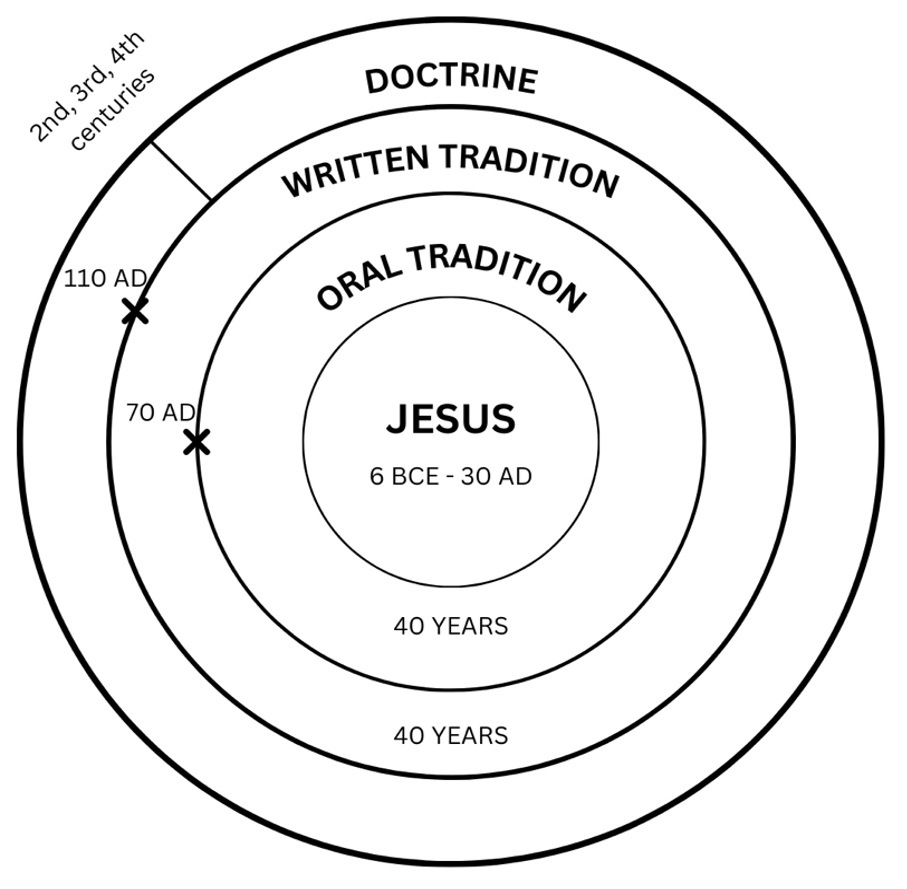
The Jesus Splash
When Jesus came in the flesh, he changed everything! Without Jesus, we would not have the New Testament. We would not have the Gospels. We would not have this Church! Jesus created waves! Jesus lived from around 6 BCE to 30 CE, and ripples went forth.
Oral Tradition
After Jesus ascended to heaven, the stories of Jesus were first told out loud. Most people couldn’t read, and this oral tradition lasted for around 40 years. The early Church thought that Jesus’ return was imminent, so they didn’t need to write it all down.
Written Tradition
After 70 CE, the written tradition begins. One man named Papias (who was a 2nd-century theologian) didn’t want a written Gospel and instead relied on oral tradition from those who knew Peter. He believed that the Gospel lived inside you, and you didn’t have to write it down.
But there were several reasons for moving from oral tradition to written tradition:
Delay of Jesus’ second coming
Eyewitnesses were dying/martyred
Further the mission of the Church
Growth of the Church
The earliest New Testament material was from Paul, and the Gospels were the last to be written. They were written on scrolls. Chapters weren’t added until the 13th century, and verses weren’t added until 100 years later.
Doctrine
Around 110, the early Christians began meeting in councils to discuss and debate doctrine. Doctrine means “correct belief.” So, this is when they began talking about the official stance and official teachings of the Church. This continued throughout the centuries.
Canon
As early as the year 367, Christians began collecting and producing several texts and had a process for what should be included in the canon of the Bible. Canon comes from the word “kanon.” It means reed, pole, measuring stick, or ruler. The word canon was used to say “the measure” of something. So, canon represents “the standard” that it takes to be accepted in the Bible.
Four Gospels Selected
There were other gospels that were written: Gospel of Thomas, Gospel of Mary, Gospel of Peter. But they did not measure up to the standard of the Church. So, there are only four canonical Gospels: Matthew, Mark, Luke, and John.
WHAT IS A GOSPEL?
In the Greek, the word gospel means “good news.” And so, the Gospels in the Bible are an account of the “Good News” of Jesus Christ. The Gospels are a written account with a theological purpose as well as a missional purpose—it’s about telling us who Jesus is and sharing the good news.
Another definition says:
“A Gospel is a narrative, fashioned out of selected traditions, that focuses on the activity and speech of Jesus as a way to reveal his character and develops a dramatic plot that culminates in the stories of his passion and resurrection.”[2]
The Gospels were not originally written to be put side by side in the New Testament. They were written for local concerns of the Church. They were written for a selective audience.
There are some differences in the Gospels, but there are also a lot of similarities between three of them in particular: Matthew, Mark, and Luke. We call them the Synoptic Gospels. Synoptic essentially means “similar.” They have a lot of similarities. And then we have John, which is very different—out on its own. The synoptics were likely written within 10 years of each other. We think John was written later.
The Four Source Theory
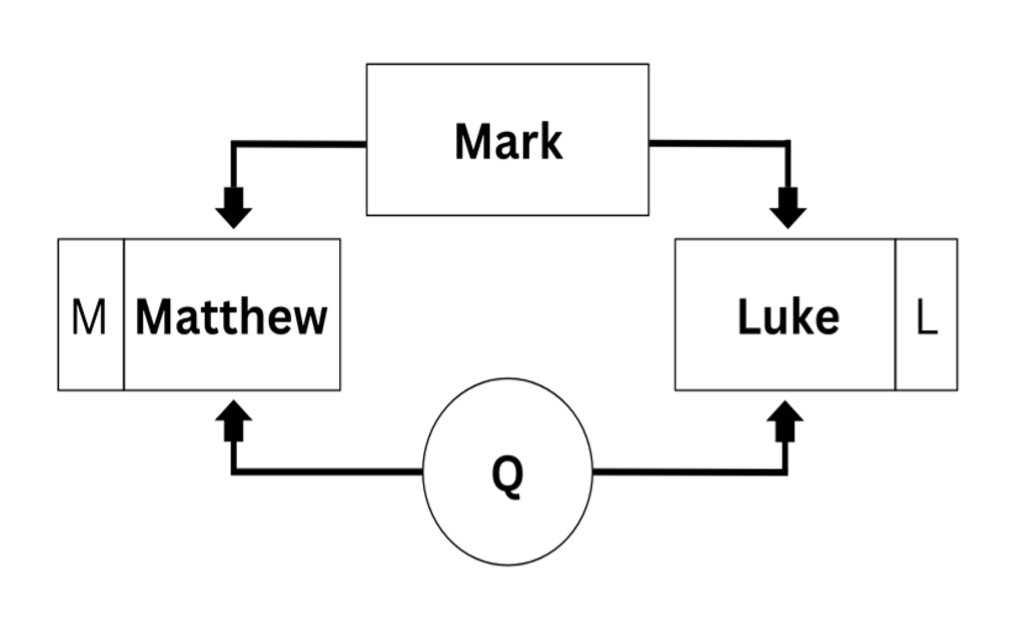
The Four Source Theory is a scholarly hypothesis that explains the similarities and differences among the Synoptic Gospels—Matthew, Mark, and Luke. It argues that these Gospels drew on four distinct sources:
Mark (Source 1): The Gospel of Mark is considered the earliest Gospel and a primary source for both Matthew and Luke. It provides much of the narrative framework found in these Gospels.
Q (Source 2): Short for “Quelle” (German for “source”), Q is a hypothetical collection of Jesus’ sayings. It explains material shared by Matthew and Luke but not found in Mark.
M (Source 3): This represents unique material found only in Matthew. It likely includes oral or written traditions specific to the community Matthew addressed.
L (Source 4): This refers to unique material found only in Luke, possibly from traditions specific to Luke’s audience.
In summary, Matthew and Luke used Mark, Q, and their respective unique sources (M and L) to compile their Gospels, resulting in both shared and distinct content.
Unifying the Gospel into One
Around 170 CE, Tatian (Tay-Shun)—a Syrian Christian—wanted to weave Matthew, Mark, Luke, and John together into one Gospel. He actually wrote this unified gospel and called it the Diatessaron (Die-A-Tess-A-Ron). He wanted to harmonize the Gospel story into one and resolve all of the little differences and inconsistencies.
The Four Gospels
Ultimately, the Church came together and said no—we want to keep these four different accounts side by side. They offer unique perspectives, and the Church valued the distinctiveness of the four Gospels. They all had something different to say about Jesus.
THE WORLD OF THE GOSPELS
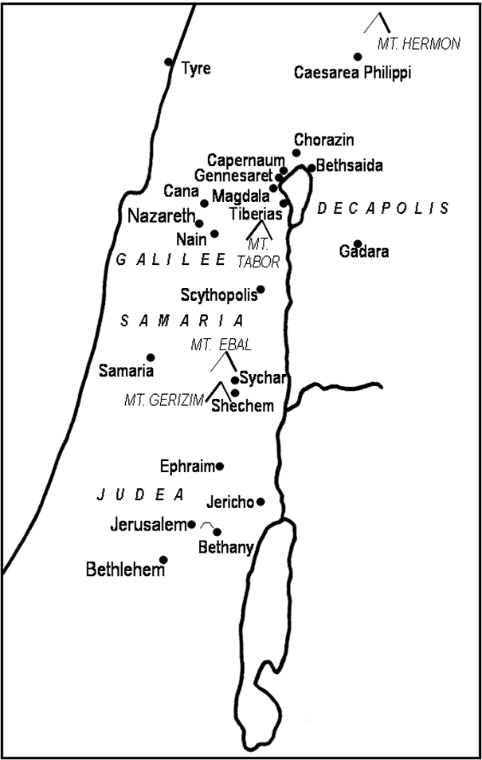
Now, let’s take a look at some of the background and culture of Jewish life at the time in which the Gospels were written.
Scholars believe that Jesus lived around 6 BCE–30 CE, and the Gospels were written between 70 and 100 CE. The world looked very different then than it does now. So, we are going to take some time to dive into the world of the Gospels.
Greek Language
Because of Alexander the Great’s conquest, there was a spread of Greek culture and Greek language. This universal spread of the Greek language is the reason why the New Testament was originally written in Greek, whereas the Old Testament is written in Hebrew. Greek was the language of the educated and the social elite.
Herod the Great
Herod the Great traveled to Rome and was given the title of king of Judea by the Roman emperor Octavian around 37 BCE. And so, Herod traveled back to Palestine and ruled over the Jewish people. Herod’s reign lasted until 4 BCE. Herod was shrewd and ruthless, and he was not liked by his Jewish citizens. However, Herod the Great is credited with the construction of the Jerusalem Temple. The Temple had been rebuilt after the Babylonian exile around 516 BCE, but Herod did not think it was grand enough for his capital city, so he had a new one constructed around 20 BCE. It was eventually destroyed by the Romans in the year 70 CE, and it has never been rebuilt since.
Herod had partial Jewish lineage, but he is described as only being Jewish when it was convenient for him. Yes, he built the Jerusalem Temple, but he also built other temples to false gods as well.
Herod Antipas
After Herod the Great’s death, Herod Antipas took over. He was the one responsible for the beheading of John the Baptist. He ruled as the king of Judea during Jesus’ adult life.
Roman Emperors
Jesus was born during the reign of Emperor Augustus. Then Emperor Tiberius (Augustus’ adopted son) was the emperor during the period of Jesus’ adult life and at the time of his trial and crucifixion.
Family Life
Family life was very different back then. Marriages were arranged by parents. Girls married between the ages of 12 and 14. Men married between the ages of 18 and 20. Polygamy was legal, but it was rare—mainly because of financial reasons. At this point in history, only men could divorce their wives, and women were not allowed to initiate a divorce. Levirate marriage was practiced. This means that if a man dies childless, his older brother was obligated to marry the man’s widow and produce children in his name. This was to ensure that the lineage of the deceased man would carry on. So, we have certainly come a long way over the years!
Education and Language
Families were primarily responsible for teaching their children. Some wealthy parents might have had the option of hiring a tutor, but that would have been the exception. The primary language of first-century Palestine was Aramaic, which is closely related to Hebrew. Before the exile, Hebrew was the common language of the people, but after the exile, Aramaic began to replace it. The official language of the Mediterranean world became Greek (again, due to Alexander the Great’s conquest).
Economic Life
The main economic activity in Palestine was agriculture (olives, wine, grain, figs, dates, vegetables, livestock, fishing—especially on the Sea of Galilee). There were also merchants, craftsmen, carpenters, potters, bakers, etc. The Temple in Jerusalem was also an important part of the economy.
One of the things that affected Israel’s economy was the taxes that were imposed on them by Rome. There were government taxes from Rome and religious taxes from Herod. Up to 40–50% of your income was taxed. This caused a lot of tension.
Groups and Institutions
Priesthood – At the upper level of society. They served as a link between the “common” people and God.
High Priest – This person was at the top of the priestly class. He was in charge of the Temple and the Sanhedrin (Jewish Council). The high priest was the only person qualified to offer sin offerings on behalf of people on the Day of Atonement. He was the only one allowed to enter into the innermost part of the Temple, “The Holy of Holies,” and only on that day.
The Sanhedrin – The ruling council within Judaism. They were the chief judicial and legislative body, made up of 70 members. They accused Jesus of threatening to destroy the Temple.
Sadducees – Priestly aristocratic party of Judaism. They rejected the belief in the resurrection. That is why they were so “Sad You See.”
Pharisees – This group accepted the belief in the resurrection of the dead. The word “Pharisees” derives from a Hebrew word meaning “separate one.” They were known for separating themselves from those they considered unclean.
Levites – The secondary level of Jewish clergy. They served as singers, gatekeepers, and custodians in the Temple.
Scribes – Experts in Jewish law and religious practices. They functioned as guardians of the traditions and teachers of the Torah. Like teachers today, they weren’t paid much—but they held prestige.
Essenes – Strict followers of Judaism who believed Temple worship had become corrupt, so they withdrew into closed communities.
Zealots – A violent group that led a revolt against Rome in the first Jewish revolt. One of Jesus’ disciples (Simon—not Peter) had been a Zealot.
Samaritans – Separate from the Judaism of Jerusalem. They believed Mount Gerizim was the proper place to worship God and only followed the Torah.
Slaves – At the bottom of the social scale. Jews and Romans kept slaves. Some were highly educated and could buy their freedom.
The Temple
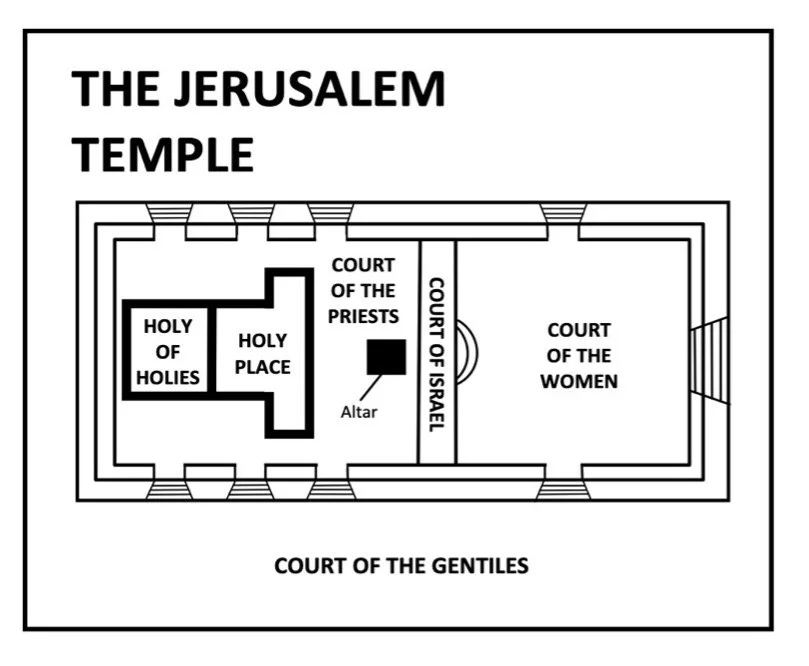
The Temple in Jerusalem was the most important religious institution for the Jewish people. This is where sacrifices, tithes and offerings, studying and teaching were located. This is where the bank was located. People would come here to worship, to socialize, and to shop. This was the center of everything. The Temple was approximately 172,000 square yards (a little over three football fields).
Israel’s Conquest
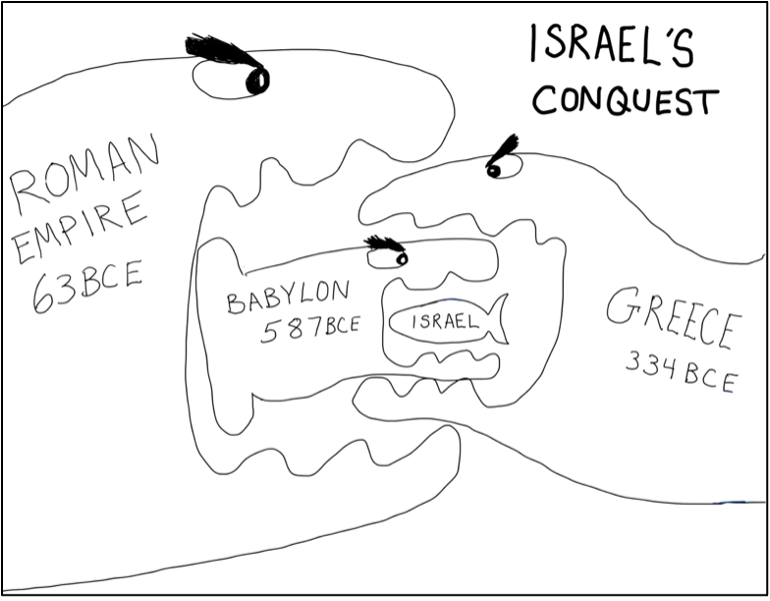
The Israelites were used to being a conquered people. Although they were not free, the Romans let the Jews practice their religion for the most part. But they were under Roman rule and were required to pay taxes.
All of this gives us some background information for our study. The Gospels were written at a specific time for a specific people, but they still speak into our lives today. And so, I hope that this has been helpful information. In Part 2, we are going to take a look at the Gospel of Mark!