Limping Toward the Light
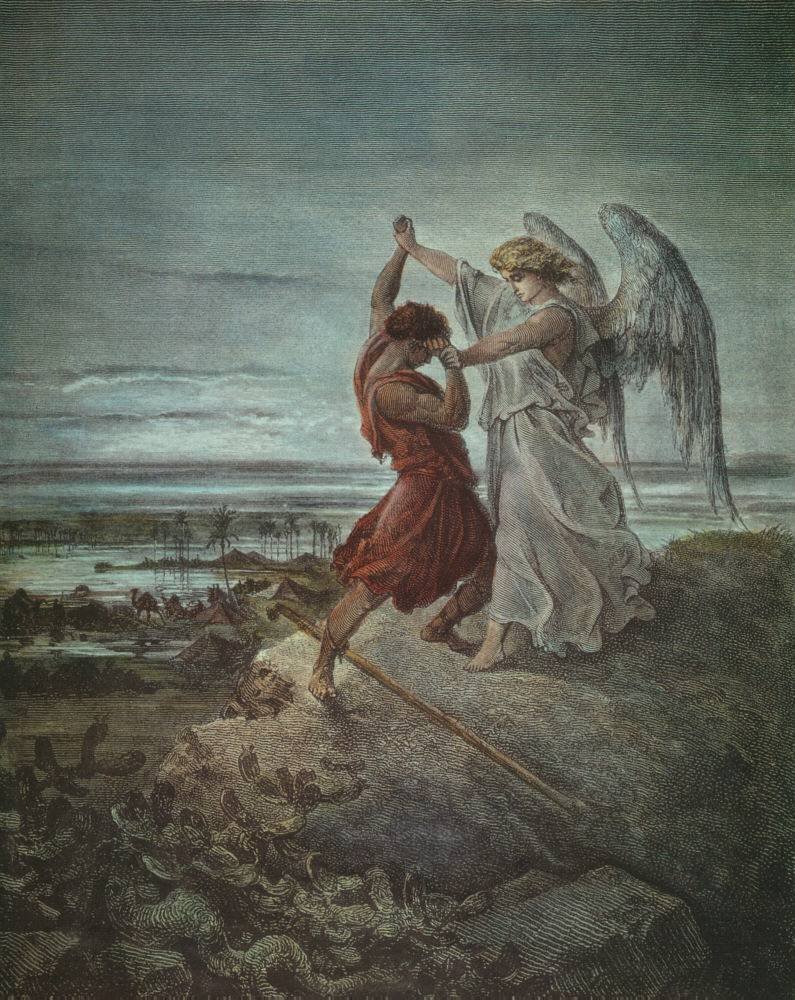
Genesis 32:22-31 (CEB)
The man said, “Let me go because the dawn is breaking.” But Jacob said, “I won’t let you go until you bless me.” He said to Jacob, “What’s your name?” and he said, “Jacob.” Then he said, “Your name won’t be Jacob any longer, but Israel, because you struggled with God and with men and won.”
The Heel Grabber
I love the story of Jacob and Esau. These twin brothers wrestle and fight in the womb. Even as they are being born, Jacob grabs ahold of his brother’s foot, competing for first place.
The twins grow up together, but they couldn’t be more different. Esau is an outdoorsman and a hunter, and his father’s favorite. Jacob is quiet and a homebody who loves his mother. But Jacob is especially jealous of his brother Esau. He has missed out on the birthright and the blessing simply because he is the secondborn.
And so, Jacob plots, plans, and schemes a way to grab ahold of Esau’s inheritance—the birthright and the blessing. And that’s exactly what he does. Jacob tricks his father, Isaac, and steals what rightfully belongs to Esau. Esau is so upset that he threatens to kill his brother Jacob for it. So, Jacob goes on the run.
Jacob is a despicable character. He is willing to do whatever it takes to get ahead. He lies. He cheats. He schemes. He is aggressive. What makes matters worse is that, despite his nasty behavior, everything seems to work out for Jacob. He’s away from home for many years. He goes on to marry and have several children. He grows extremely wealthy.
Everything has worked out for Jacob. He is a successful man. But there comes a point, long after his father Isaac has passed away, when Jacob longs to go back home again. He hopes his brother Esau has let bygones be bygones. He wants to return to his home, back to the land that God promised to Abraham, Isaac, and now to him. This gift of land. This gift from God.
For most of his life, Jacob has been able to scheme his way out of trouble. He can trick his father, outmaneuver his brother, and figure out how to get what he wants. But now, he’s about to face the one thing he can’t scheme his way out of. He has to face his brother. And for the first time in a long time, Jacob is afraid that he might not be able to fix this on his own.
And so, he sends a friendly message to his brother Esau, saying:
“Humble greetings from your servant Jacob. Until now I have been living with Uncle Laban, and now I own cattle, donkeys, flocks of sheep and goats, and many servants, both men and women. I have sent these messengers to inform my lord of my coming, hoping that you will be friendly to me” (Genesis 32:4b–5, NLT).
You can tell that Jacob is trying to butter his brother up. He knows there is bad blood between them. This becomes clear when Jacob’s messengers tell him that Esau is on his way with an army of 400 men. There has clearly been hurt, wrongdoing, and pain. These two brothers are stuck in a perpetual cycle of animosity, anger, and resentment.
So, Jacob decides to divide up his household. He gathers 200 goats, 200 sheep, 20 rams, 30 female camels with their young, 40 cows, 10 bulls, and 40 donkeys. He sends them all ahead of him to Esau as a gift, hoping that Esau will forgive him.
But Jacob is terrified. He is afraid. He knows that his brother is angry. And so, in this moment of fear, Jacob offers a prayer to God. He says:
“O God of my grandfather Abraham, and God of my father, Isaac—O Lord, you told me, ‘Return to your own land and to your relatives.’ And you promised me, ‘I will treat you kindly.’ I am not worthy of all the unfailing love and faithfulness you have shown to me, your servant. When I left home and crossed the Jordan River, I owned nothing except a walking stick. Now my household fills two large camps! O Lord, please rescue me from the hand of my brother, Esau. I am afraid that he is coming to attack me, along with my wives and children. But you promised me, ‘I will surely treat you kindly, and I will multiply your descendants until they become as numerous as the sands along the seashore—too many to count’” (Genesis 32:9–12, NLT).
Out of fear, Jacob offers this prayer. It reminds me of what Nobel Prize-winning author Isaac Bashevis Singer once said: “I only pray when I’m in trouble. And because I’m in trouble all of the time, I pray almost constantly.”
It’s often like that. We only pray when we are in trouble. We pray when we are fearful and scared, when things aren’t going our way. In some ways, it is easier to turn to God when we are desperate. We often aren’t as aware of our need to pray when everything is going well. But we know what it’s like to struggle. We struggle all the time. Life is just hard sometimes.
And this is where Jacob finds himself. Jacob is in trouble. On the night before he will stand face-to-face with his brother, he prays. He prays for safety. He prays for salvation. He prays out of fear. He reminds God of God’s promises, holding God accountable to what God said would be done.
Alone in the Darkness
At this point in the story, everyone is gone. Jacob has sent his wives, his servants, their children, and all his possessions to the other side of the Jabbok River. This river is the only thing that stands between him and the Promised Land.
Only Jacob remains behind to spend the night alone. Alone with his thoughts. Alone thinking about his past decisions. Alone, confronted with his fears. In the morning, he will have to face his brother, but on this night, he is totally and completely alone.
Or so he thinks.
In this quiet moment of solitude, Jacob encounters a mysterious stranger who suddenly jumps on him. They engage in serious combat, pushing and pulling, lashing and thrashing throughout the night. In the darkness, they wrestle.
We never see the attacker’s face. We are never told exactly who this mysterious figure is. There is a lot of speculation. Is it God? Is it an angel of the Lord? Is it Jacob himself? Who knows? The Bible doesn’t really say.
But before long, it becomes clear that Jacob is holding his own. He has a hold on the stranger and is unwilling to let him go. After all, Jacob is stubborn. He is going back to his days in the womb, when he grabbed ahold of Esau’s heel and wouldn’t let go.
Jacob and the stranger continue to fight. As the sun begins to rise, the stranger, realizing that he is not getting away, touches Jacob’s hip and puts it out of joint. I think that goes against the whole idea of what it means to be “touched by an angel.” It’s not a sweet, sentimental event. In this story, if an angel touches you, you’re wounded.
But even in his pain, Jacob does not let go. The stranger calls out, “Let me go before the sun comes up.” But Jacob continues to hold on, saying, “I will not let you go unless you bless me.”
Jacob doesn’t seem to know when to quit. He has already tricked Esau and stolen a blessing and a birthright. He has accumulated massive wealth on his own. And now, he is demanding yet another blessing from this stranger. And again, Jacob gets his way.
And yet, God seems to get God’s way in the end after all. The stranger blesses Jacob with a new name. No longer will he be called Jacob, the “heel grabber.” From now on, his name will be Israel because he has struggled with God and with humans and has prevailed. Israel means “one who struggles with God.”
The Wounded Wrestler
So, who is this stranger? Is it God? Is it an angel of the Lord? Is it Jacob himself? I don’t think we can offer one definitive answer.
Instead, I think we can explore what that might mean for us in different ways. After all, there are times when we end up wrestling with ourselves. We are wrapped up in an internal struggle. We wrestle with our anxiety and our fear. We wrestle with our questions and our doubts. We wrestle with all sorts of things—alcohol, depression, an abusive childhood. The things that keep us up at night, tossing and turning in our beds, are not unlike the back-and-forth of a wrestling match.
And then there are times when we wrestle with God. We ask questions of faith and doubt. Is God real? Is God there? Does God care? We ask God, “Why?” Why do bad things happen to the people we love? Why is there suffering? Does our faith really matter? What is God calling me to do? Is God really calling me? We wrestle with God over the problems we don’t understand, over God’s plan for our lives, and over the questions about God that haunt us. And perhaps we, like Jacob, wrestle with God hoping for a blessing.
I can’t help but think that maybe God has been wrestling with Jacob his whole life. Perhaps God has been trying to shape Jacob into the man God has called him to be. Here again, we see yet another attempt to whip Jacob into shape. One commentator suggests that God comes disguised as a stranger in human form and wrestles with Jacob to make it fair, to give Jacob a fighting chance. I like that thought.
Ultimately, Jacob recognizes the divine in the stranger. He spends the entire night wrestling with this mysterious figure. It’s dark. He can’t see clearly. He doesn’t even know exactly who he’s fighting. But as the sun begins to rise, as the morning breaks, he recognizes that he has encountered God. He names that place Peniel because, as he explains, “I have seen God face-to-face, and yet my life is preserved.” He names this spot by the river “the face of God.”
Jacob walks away with a new name and, thanks to his displaced hip, a new limp that sticks with him for the rest of his days. He walks away as a wounded wrestler.
It’s interesting because Jacob has spent his whole life relying on his own brainpower, trickery, and strength. It is only when he is broken—only when he receives a limp—that he comes face-to-face with his own brokenness.
Jacob’s blessing comes in the middle of the struggle. He encounters God, and he leaves changed. But he also leaves wounded. And I don’t think that means the wound itself was good or that God needs us to suffer in order to bless us. Sometimes the wounds we carry are simply wounds. But even those wounds don’t have to be the end of our story. God can meet us in the middle of our brokenness, and even there, something new can begin. Henri Nouwen once said:
“Nobody escapes being wounded. We are all wounded people, whether physically, emotionally, mentally, or spiritually. The main question is not ‘How can we hide our wounds?’ so we don’t have to be embarrassed but ‘How can we put our woundedness in the service of others?’ When our wounds cease to be a source of shame and become a source of healing, we have become wounded healers.”
I think being a wounded wrestler is a great metaphor for prayer and faith. Prayer and faith can sometimes be a struggle. It’s not passive. It’s active. It’s like wrestling with God. We go to the mat with our fears, our grief, and our struggles, and it is out of those situations that we experience a blessing. Even in the struggle, we come face-to-face with God. We get up close to God. Intimacy, closeness, struggle—God up close. It’s incarnational.
God breaks through the darkness, breaks through our sin and shame and guilt and past, and, through our wounds and scars, finds a way to make things right. To stop the struggle once and for all. It’s a story that reminds us of Easter. The Light of the World enters the darkness, bears the wounds of love, and leads us toward new life. We can think of Jesus of Nazareth, who limped through the streets of Jerusalem, carrying his cross. Jesus, staggering on broken feet out of the tomb, toward resurrection, toward new life, and taking us with him.
Walking with a limp reminds us of where we’ve been. And it shows us how far we’ve come.
Jacob’s story tells us that we can change through an encounter with God—meeting, fighting, wrestling, and being transformed by a God who loves us more than we know.
The limp helps Jacob take his next steps toward Esau.
When Morning Breaks
The next day, the moment of truth arrives. Jacob looks up and sees his brother Esau coming. Jacob goes before his brother and bows down before him seven times, trying to show humility and submission. Then the most amazing thing happens. Esau runs up to his brother, embraces him, and kisses him. Then they both begin to weep.
After this simple attempt to seek forgiveness, years of resentment and hatred finally give way to reconciliation. The climax of this story comes when Jacob looks at Esau and says, “To see your face is like seeing the face of God” (Genesis 33:10).
It’s a face he sees clearly in the daylight. It’s not a face shrouded in darkness. It’s not the face of a stranger. He sees his brother’s face, and he sees the face of God. He recognizes the character of God in this act of forgiveness and reconciliation. To look at your brother’s face and see the face of Christ. To look at your sister’s face and see God’s face reflected back at you.
Whenever we find ourselves struggling in the darkness, we can know that God is with us in that struggle. And we can find hope in knowing that morning is coming soon. The light is breaking through.
Seeing the Face of God
And if we ever wonder what the face of God looks like because it’s too dark to see clearly, or because it feels like God is nothing more than a stranger, all we have to do is look to Jesus.
In Jesus, we see a face full of love and compassion. In Jesus, we see a face that welcomes the rejected, weeps with those who grieve, and looks with love toward those who are lost. We see the face of Jesus crucified, taking on the sins of the world. We see the face of Jesus resurrected, still bearing the wounds of the cross but shining light into the world. In Jesus, we see the character of God—not condemnation, but compassion; not rejection, but love; not a God who stands apart from suffering, but a God who enters into it with us. Our wounds and questions may remain, but dawn can teach us to see differently—to recognize God in those we once feared and Christ in one another.